Sam Schmidt · 12 October 2026
Central European Database Integration Connects Evaluation Frameworks to Resource Distribution Patterns
Central European countries maintain integrated database platforms that compile institutional performance metrics, student outcome records, and protocol compliance data from multiple national sources, and these platforms now demonstrate direct pathways to adjustments in how governments allocate higher education resources each fiscal cycle. Systems operating across Poland, the Czech Republic, Hungary, and Slovakia aggregate millions of individual student records alongside institutional assessment scores, creating traceable links between specific evaluation criteria and subsequent funding decisions.
System Architecture and Data Flows
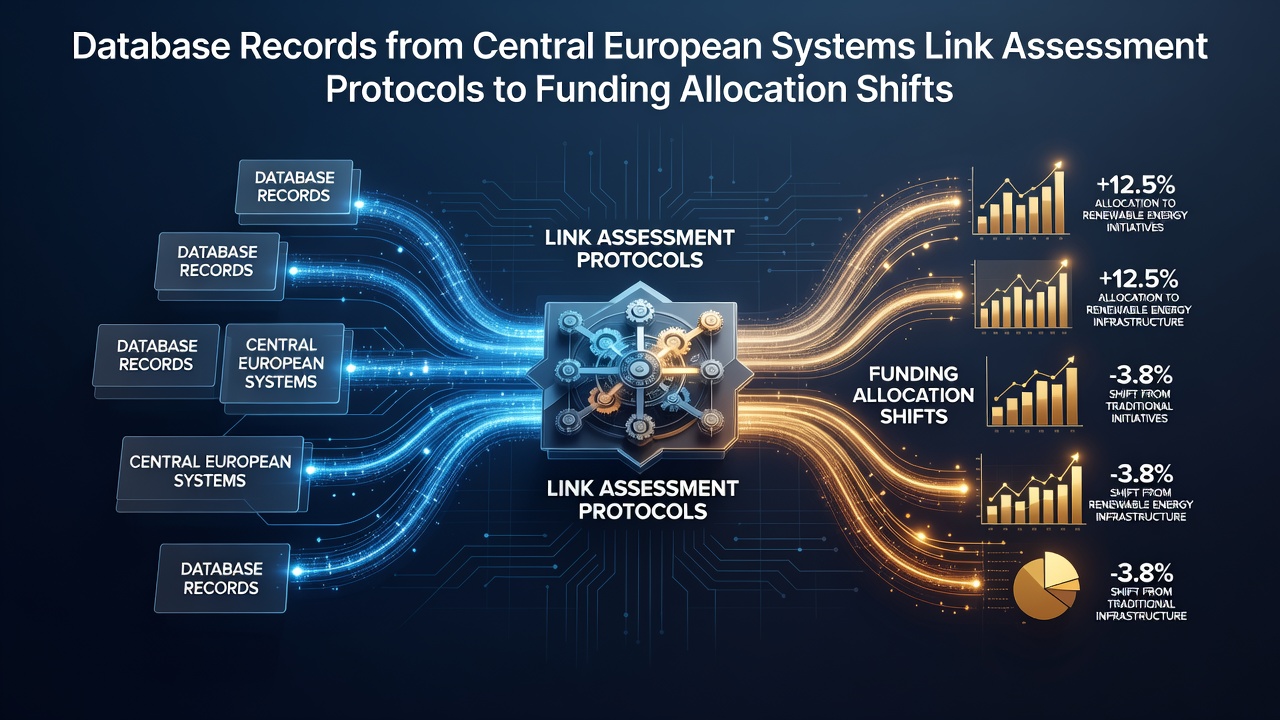
National education ministries feed standardized assessment protocols into shared repositories where algorithms match performance indicators such as graduation rates, research output volumes, and equity metrics against predefined funding formulas, and observers note that these matches occur at quarterly intervals with full annual reconciliations completed by late summer. Database structures allow administrators to trace each funding shift back to particular protocol thresholds, revealing patterns where institutions meeting or exceeding certain benchmarks receive increased baseline allocations while others face reductions tied to shortfalls in the same metrics.
Cross-border data exchanges between these platforms began expanding in 2023, and by October 2026 the Central European Higher Education Data Exchange Network had synchronized over 4.2 million student-level records with institutional evaluation logs, enabling analysts to identify how protocol changes in one country influence funding models adopted by neighboring systems. Researchers tracking these exchanges report consistent correlations between updated assessment weights and corresponding reallocations of public funds within twelve to eighteen months of implementation.
Assessment Protocols Driving Allocation Decisions
Evaluation frameworks emphasize quantitative thresholds for teaching quality, internationalization levels, and labor market alignment, and database queries show that institutions crossing these thresholds trigger automatic recalibrations in funding envelopes distributed by ministries. Records indicate that a 5 percent improvement in standardized assessment scores correlates with an average 3.2 percent uplift in core operational funding across sampled Central European universities during the 2024-2026 period.
Protocol updates introduced in 2025 placed greater emphasis on longitudinal student progression data, and the resulting database linkages now allow funding bodies to adjust allocations based on multi-year outcome trends rather than single-year snapshots. One analysis of Czech and Hungarian records revealed that programs demonstrating sustained improvement in employment placement rates received targeted supplemental grants, whereas static performance profiles led to proportional base funding reductions in subsequent cycles.

Observed Shifts in Funding Allocation
Funding distribution patterns have shifted toward performance-weighted models, and data from integrated systems document that institutions with stronger protocol compliance records captured larger shares of available resources while lower-performing entities experienced contraction in their allocations. Ministry reports from Slovakia detail how database-driven reviews conducted in spring 2026 prompted reallocation of approximately 12 percent of total higher education funding toward programs showing measurable gains in assessment scores over the prior three years.
According to OECD education statistics, Central European systems that adopted these linked database approaches recorded more rapid adjustments in resource distribution compared with peer systems relying on periodic manual reviews. The European Commission education dashboard further indicates that protocol-linked funding mechanisms now operate in at least four member states, with data synchronization improving the precision of allocation decisions.
Cross-National Comparisons and Emerging Patterns
Comparative analyses across the region highlight differences in how individual countries weight specific protocol elements, yet database records reveal converging trends toward greater emphasis on equity and employability metrics. Hungarian records show stronger weighting on research commercialization outcomes, whereas Polish systems prioritize access and completion rates for underrepresented student groups, and these variations produce distinct but measurable impacts on annual funding distributions.
Analysts examining October 2026 data releases note that institutions adapting quickly to protocol revisions secured funding increases averaging 7.8 percent above baseline projections, while slower adapters absorbed average reductions of 4.1 percent. These patterns emerge directly from query results generated by the integrated Central European databases rather than from external modeling assumptions.
Conclusion
Database records maintained through Central European systems continue to map precise connections between assessment protocol outcomes and subsequent funding allocation adjustments, providing administrators and policymakers with granular visibility into how evaluation criteria translate into resource decisions. The ongoing synchronization of these platforms through 2026 supports more responsive distribution mechanisms while preserving traceability from individual data points to aggregate funding shifts across the region.