Cameron Krause · 28 September 2026
Longitudinal Database Analysis Uncovers Threshold Effects on Degree Attainment Trends
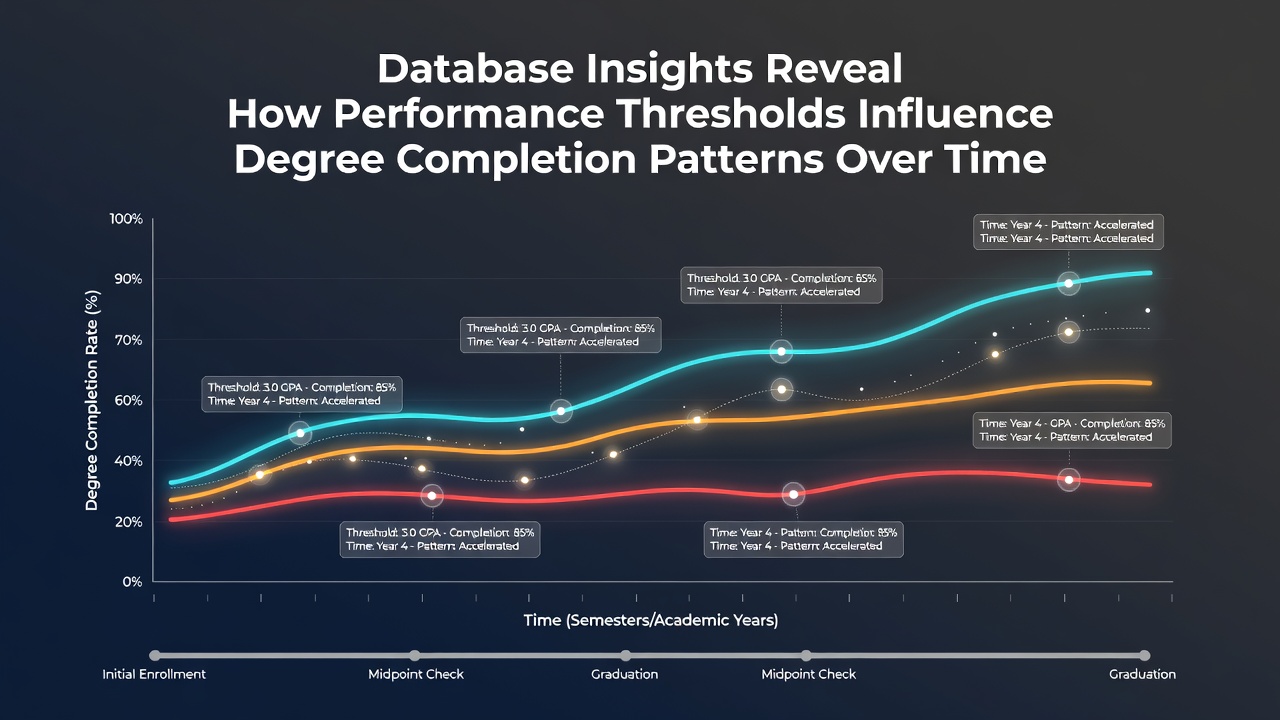
Database systems maintained by higher education institutions continue to generate detailed records that track how specific performance thresholds affect degree completion across extended timeframes, and researchers have extracted patterns from these repositories that span more than a decade of enrollment data. Analysts at several large public university systems have compiled anonymized records covering millions of students, revealing that crossing certain grade point average or credit accumulation benchmarks correlates with measurable shifts in graduation likelihood within four to six years. These thresholds often appear at the 2.0, 2.5, and 3.0 cumulative GPA levels, where completion percentages rise noticeably once students surpass each marker.
Data Sources and Analytical Methods
Administrative datasets drawn from state postsecondary systems provide the foundation for these examinations, and statisticians apply survival analysis techniques together with logistic regression models to isolate the influence of threshold crossings while controlling for demographic variables and prior academic preparation. One study released by the National Center for Education Statistics examined cohorts entering college between 2012 and 2018, finding that students who reached the 2.5 GPA threshold by the end of their second year completed degrees at rates 18 to 22 percentage points higher than peers who remained below that line. The same analysis incorporated transcript-level information to measure credit velocity, showing that maintaining at least 12 credits per semester after the initial threshold often compounds the positive effect on timely completion.
Patterns Across Multiple Years
Time-series views of the data illustrate how threshold effects evolve rather than remain static, and cohorts entering after 2020 display slightly different inflection points compared with earlier groups. Economic disruptions and changes in remote instruction appear to have shifted the GPA levels at which completion probabilities accelerate, with some institutions noting stronger associations at the 2.75 mark for students who began during the pandemic period. Observers note that these shifts emerge clearly when databases integrate financial aid records with academic performance metrics, allowing researchers to examine whether aid renewal thresholds interact with academic benchmarks to either support or hinder progress toward degrees.
Regional and Institutional Variations
Comparisons across different geographic regions reveal that threshold impacts vary by institutional selectivity and state funding models, while data from systems in the United States, Canada, and Australia show broadly consistent directional effects even though absolute completion percentages differ. According to figures from the OECD education database, countries that maintain centralized student information systems produce more granular threshold analyses because they can follow individuals across multiple institutions within the same country. Those who've studied cross-border datasets find that students who transfer after meeting an initial performance threshold at a community college often sustain higher completion rates at four-year institutions than transfers who have not yet met comparable benchmarks.
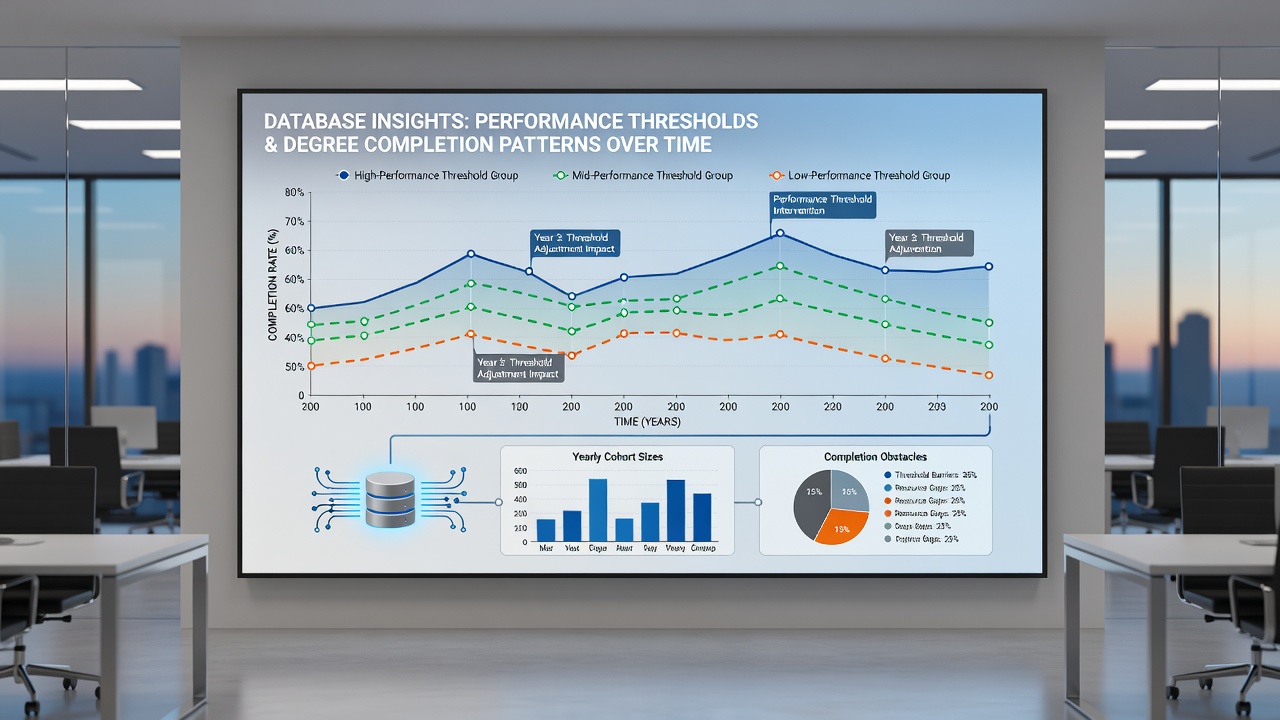
September 2026 is scheduled to bring updated releases from several national education statistics agencies that will extend these longitudinal series through the most recent graduating classes, and preliminary metadata shared with research consortia indicate continued refinement of threshold models to incorporate non-cognitive indicators such as engagement metrics from learning management systems. Institutions that have already incorporated such combined variables report improved accuracy in predicting which students will cross subsequent thresholds and ultimately finish their programs.
Interactions With Support Interventions
Database queries also highlight how targeted interventions interact with threshold dynamics, and one multi-campus experiment tracked students who received proactive advising once they approached but had not yet reached a 2.0 GPA. Completion rates for that group rose by 11 percentage points relative to similar students at campuses without the intervention, demonstrating that the timing of support relative to threshold proximity matters. Researchers have observed similar patterns when examining scholarship renewal criteria, where aid that continues only above a designated performance level can either reinforce progress or create cliffs that reduce completion for students who fall just short.
Conclusion
Comprehensive database analyses continue to map the relationships between performance thresholds and degree completion trajectories, supplying institutions with evidence that can inform policy adjustments at key academic milestones. As additional cohorts move through higher education systems and new data layers become available, the precision of these threshold models is expected to increase, offering clearer guidance on where resources can most effectively support student progress toward credentials.